History and heritage of Kalymnos
The island that dived for sponges, and the town, diaspora and culture that trade built.
The sponge-diving story
For most of the 19th and 20th centuries, Kalymnos lived from the sea floor. Its men dived for sponges across the Mediterranean and North Africa: first naked on a single breath, then in heavy brass-helmeted suits fed air through a hose. The suits let them go deeper and stay down longer, and they paid for it. Decompression sickness, the bends, left a generation of divers paralysed or dead. The island called it the price of the sponge.
That trade made this small rock wealthy and known. It built the neoclassical mansions along Pothia's harbour, funded churches and schools, and sent Kalymnians around the world when the sponge market collapsed and disease hit the beds. The largest communities settled in Tarpon Springs in Florida and across Australia, and their descendants still come home every summer. It is why an island of a few thousand people has a diaspora of tens of thousands, and why Easter here fills the churches.
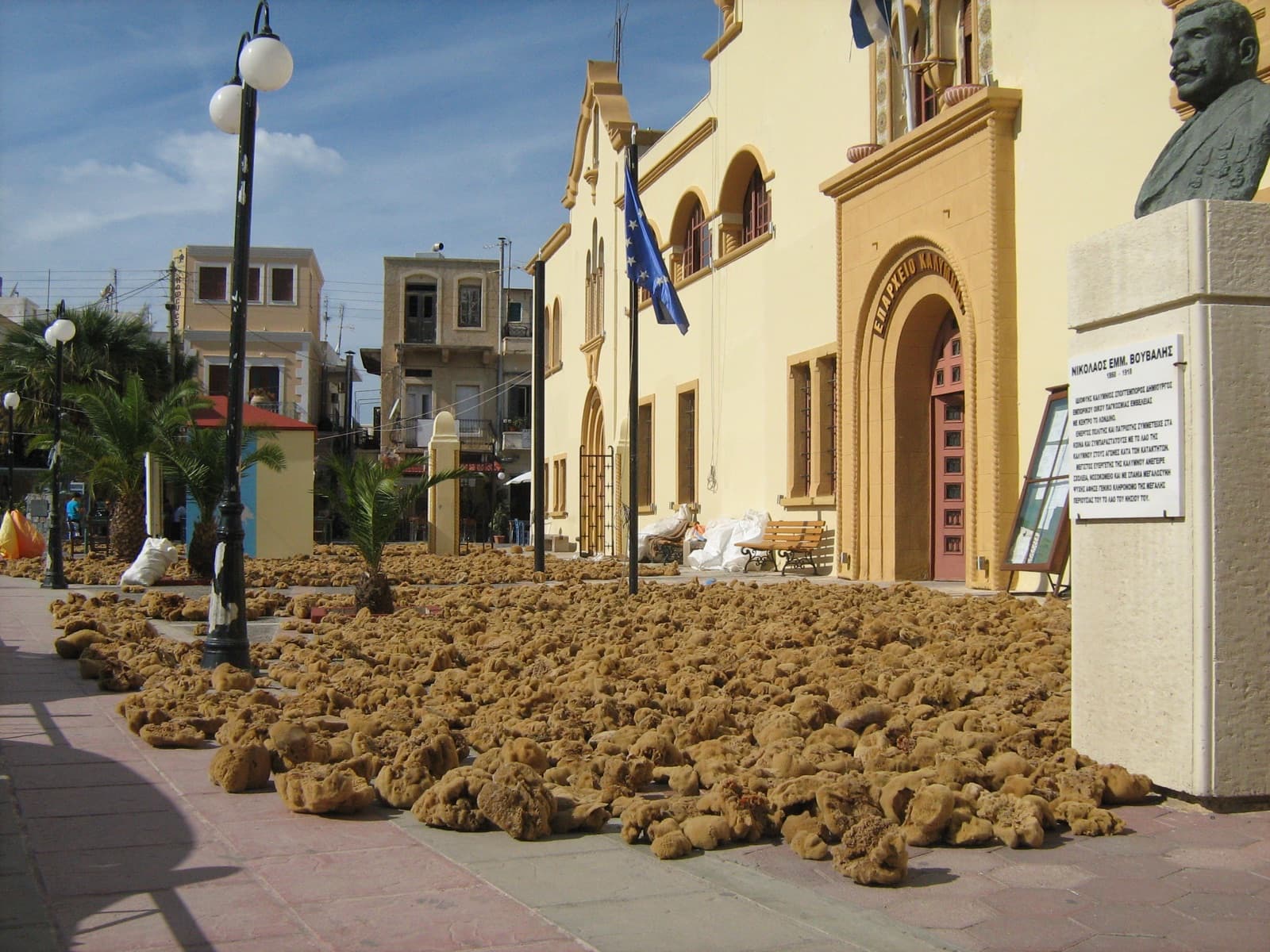
You can still meet the story directly: the sponge workshops on the Pothia quay where a rough sea-sponge is cleaned and cut, the maritime and folklore collections, and the Sea World Museum at Vlychadia, built by a diving family from a lifetime of finds off the seabed.
Beyond the sponges
- Ancient Kalymnos: the Archaeological Museum in Pothia holds finds from the island's classical and Hellenistic past, including the sanctuary of Apollo.
- Castles: Pera Kastro above Chorio, the fortified refuge with chapels inside its walls, and the little Chrysocheria castle with its three windmills.
- Monasteries and churches: Agios Savvas watches over Pothia, and hundreds of chapels dot the hills and Telendos.
- Telendos: ruins and early-Christian remains along the shore paths of the island that an earthquake split off in the 6th century.
Sights and museums
97 results
Κάστρο Γαλατιανής
ArginontaΚάστρο Καστελιού
ArginontaAgios Georgios
EmporiosAgios Nikolaos
EmporiosStavros
EmporiosPizanias
MasouriAg. Annis
Panormos / KantouniAg. Joannis Prodomos
Panormos / KantouniAgia Paraskevi
Panormos / KantouniAgia Paraskevi
Panormos / KantouniAgia Sofia
Panormos / KantouniAgia kaliopi
Panormos / KantouniAgii Apostoli
Panormos / KantouniAgios Cristoforos
Panormos / KantouniAgios Fotis
Panormos / KantouniAgios Paisios
Panormos / KantouniChristos tis Ierusalem (Early Christian Basilika)
Panormos / KantouniDamos
Panormos / KantouniMetamorfoseos tou Sotiros
Panormos / KantouniTimiou Stavrou
Panormos / KantouniΆγιος Αθανάσιος
Panormos / KantouniΆγιος Γεώργιος
Panormos / KantouniΆγιος Νικήτας
Panormos / KantouniΆγιος Νικόλαος
Panormos / KantouniΑγία Σοφία
Panormos / KantouniΑρχάγγελος
Panormos / KantouniΚάστρο Χώρας Καλύμνου
Panormos / KantouniΜεταμόρφωση Σωτήρος
Panormos / KantouniΜονή Σταυρού
Panormos / KantouniΠαναγιά
PothiaΆγιος Βασίλειος
TelendosΆγιος Γεώργιος
TelendosΘολάρια
TelendosΚάστρο Τελένδου
TelendosΠαλαιοπαναγιά
TelendosAgios Andreas
VlychadiaSea World
VlychadiaΣταυρός
VlychadiaFrequently asked questions
Why is Kalymnos famous for sponge diving?
For over a century Kalymnian divers harvested sponges across the Mediterranean, making the island wealthy and world-known at a heavy human cost. The trade shaped the town, the emigration and the culture that survive today.
What museums are there on Kalymnos?
The Archaeological Museum in Pothia, maritime and folklore collections, sponge workshops, and the Sea World Museum of a diving family's finds at Vlychadia. Filter the list above by 'Museum'.
Can you visit the castles on Kalymnos?
Yes. Pera Kastro above Chorio is the fortified old refuge, and the little Chrysocheria castle with its windmills sits on the road between Pothia and Chorio.